 Home
HomeHow to Properly Choose LED Downlights for the Kitchen?
 A-ONE LED Lighting
 May 16,2026

1. Ceiling Height and Aerodynamic Considerations
2. Ultra-Thin Panel Downlights and Spatial Adaptability
3. An Overlooked Budget Priority: Labor Costs
4. Rigorous Safety Protocols: IP Protection Ratings
5. Operational Costs and Energy Efficiency
6. "Canless" LED Downlights and Low Maintenance Costs
7. Zonal Lighting Logic: Task Areas vs. Relaxation Zones
8. Integrating Dimming Capabilities with Interior Style
The kitchen is not merely a place for cooking; it is the very heart of family life. In modern home design, the selection and layout of Kitchen LED Downlights directly determine the space's functionality and safety. Faced with a dazzling array of lighting products on the market, how can one—within a specific budget—filter out fixtures that are not only energy-efficient and aesthetically pleasing but also capable of withstanding the demanding environment of a kitchen?
As a professional manufacturer with 17 years of deep expertise in the lighting industry, we have compiled eight decisive factors you must consider when purchasing Kitchen LED Downlights to help you create the ideal lighting environment for your kitchen and bathroom spaces.
1. Ceiling Height and Aerodynamic Considerations
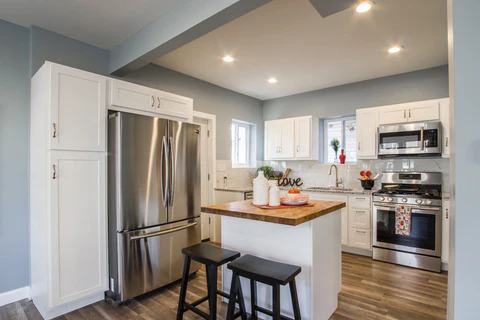
When planning for Kitchen LED Downlights, ceiling height is the primary consideration. Cooking generates significant amounts of heat and moisture; a higher ceiling height not only facilitates better air circulation but also provides a more favorable environment for the fixtures to dissipate heat.
Balancing Light Density: The higher the ceiling, the wider the light dispersion area. For kitchens with high ceilings, it is advisable to select downlights with higher lumen outputs and more precise beam angles to ensure that light is effectively projected onto work surfaces.
The Necessity of Moisture Protection: Given the steam generated during cooking, it is imperative to ensure that the fixtures you select feature a robust sealed structure to prevent moisture from seeping into the internal circuitry.
2. Ultra-Thin Panel Downlights and Spatial Adaptability
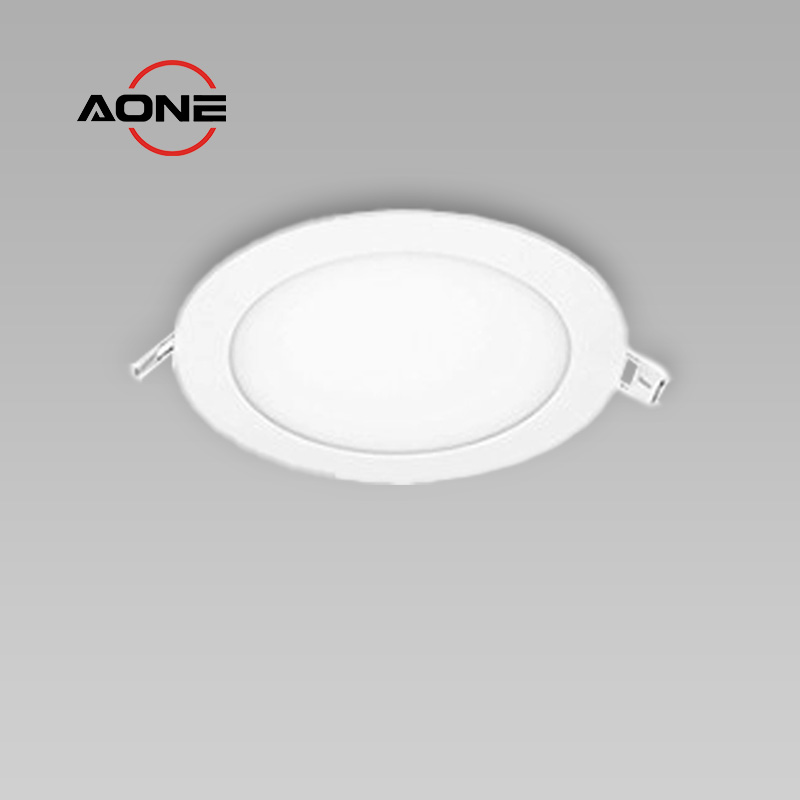
If you are facing limitations regarding ceiling cavity depth (i.e., a "shallow cavity"), ultra-thin LED panel downlights are the optimal choice. These fixtures do not require deep recessing for installation and cause minimal structural intrusion to the ceiling.
Installation Convenience: During kitchen renovations or retrofits, ultra-thin downlights significantly simplify the challenges associated with drilling holes and routing wiring. If you are unsure about the wiring scheme, consulting a professional electrician is essential to ensure a safe and code-compliant installation.
3. An Overlooked Budget Priority: Labor Costs
When purchasing Kitchen LED Downlights, many buyers focus solely on the unit price of the fixtures themselves. However, in large-scale projects or home renovations, the cost of labor for installation often constitutes a significant portion of the total budget. TCO (Total Cost of Ownership) Logic: Opting for fixtures with a scientifically sound design—specifically those supporting "Quick Connectors"—may entail a slightly higher unit price initially, but it significantly reduces installation time for electricians, thereby lowering overall labor costs.
4. Rigorous Safety Protocols: IP Protection Ratings
The complexity of the kitchen lighting environment lies in its dual characteristics of "high temperature" and "high humidity." Consequently, the ingress protection performance (IP Rating) of kitchen LED downlights is of paramount importance.
Zone-Specific Matching: For areas near the sink or zones frequently exposed to splashing water and steam, it is recommended to select IP65-rated waterproof downlights. In general dining areas, however, an IP44 rating is sufficient. Safety should always take precedence over aesthetic flair.
5. Operational Costs and Energy Efficiency
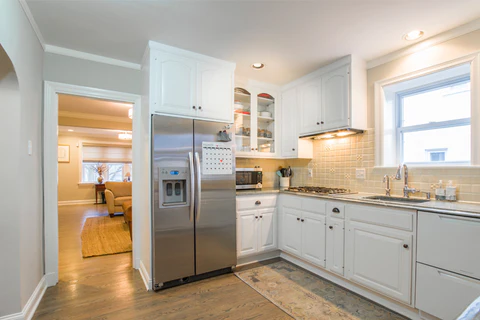
Kitchen lighting typically remains active for extended periods throughout the day—a trend amplified by the growing popularity of open-plan kitchen-diners. In such high-usage scenarios, the energy efficiency of kitchen LED downlights directly impacts monthly electricity bills.
High-Efficacy Selection: Choosing LED chips with a luminous efficacy exceeding 100 lm/W allows for a substantial reduction in energy consumption without compromising brightness, thereby aligning with global sustainability standards for green buildings.
6. "Canless" LED Downlights and Low Maintenance Costs
High-quality kitchen LED downlights from reputable manufacturers are virtually maintenance-free. However, the kitchen environment—where fixtures are constantly exposed to cooking fumes, high temperatures, and grease—poses significant challenges to the corrosion resistance of the fixture housing and the stability of the LED driver.
Warranty Assurance: To mitigate potential maintenance risks, it is advisable to select brands that offer an extended 5-year warranty. This serves not only as a testament to product quality but also as a guarantee of long-term operational safety.
7. Zonal Lighting Logic: Task Areas vs. Relaxation Zones
The kitchen functions as more than just a utilitarian workspace; it is also a social hub. Therefore, the layout of kitchen LED downlights should adhere to a "zonal design" strategy:
Cooking Zone (Task Area): This area requires the installation of fixtures featuring high color rendering (CRI 90+) and high brightness to ensure optimal visual clarity and safety during food preparation. Dining/Social Area: Opt for a lighting scheme featuring warmer color temperatures (2700K–3000K) and softer illumination. If the kitchen benefits from ample natural light, utilize sensors or manual controls to dim the artificial lighting during the day.
8. Integrating Dimming Capabilities with Interior Style
The color palette of a kitchen’s decor directly influences the effectiveness of its lighting:
Dark-Toned Kitchens: Require stronger, more focused lighting to highlight material textures and prevent the space from feeling overly oppressive.
Light-Toned Kitchens: With their highly reflective walls and cabinetry, these spaces are ideally suited for Kitchen LED Downlights equipped with dimming capabilities. This allows for on-demand adjustment of light intensity to match the desired ambiance, achieving a perfect harmony between lighting effects and interior decor.
Why is A-ONE LED Your Ideal Partner for Kitchen LED Downlights?
When selecting a professional lighting supplier, A-ONE LED Lighting stands out as the preferred choice for B2B clients worldwide, backed by 17 years of accumulated expertise in OEM/ODM services.
Exceptional Customization Capabilities
We understand that every kitchen has unique requirements. A-ONE offers a comprehensive suite of services—ranging from customized lumen outputs and IP protection upgrades to bespoke optical design solutions. Whether you require fire-rated integrated downlights or ultra-slim, anti-glare models, we provide solutions that fully comply with European and North American regulatory standards.
Robust Manufacturing Scale and Quality Control
Leveraging a 6,000 m² production facility, A-ONE maintains a stable monthly production capacity exceeding 300,000 units. We strictly adhere to the ISO 9001 quality management system, subjecting every Kitchen LED Downlight to rigorous aging tests and performance calibration.
Rapid Response and Expert Consultation
Our professional team delivers more than just high-quality lighting fixtures; we also provide forward-thinking advice on lighting layout and design. For bulk orders (ranging from 200 to 100,000 units), we guarantee rapid delivery within 15 to 35 days.
Selecting the right Kitchen LED Downlights is a comprehensive undertaking that balances safety, energy efficiency, and spatial aesthetics. By carefully considering ceiling height, IP ratings, and zone-specific lighting strategies, you can significantly enhance the functionality and overall experience of your kitchen. A-ONE LED Lighting is dedicated to providing you with smart lighting solutions that meet 2026 standards, powered by innovative technology and exceptional design. If you are seeking a reliable supplier for kitchen lighting, please contact us—let us work together to illuminate your professional projects.
 How to Choose an Excellent LED Ceiling Light Manufacturer?


 2F, Building 2, Zhongda Industrial Park, Dongshan Industrial Street, Zhangmutou Town, Dongguan, Guangdong 523619, China