
 Home
HomeMaking 300K+ Lights a Month: How We Count Every Piece?
 A-ONE LED Lighting
 Jun 30,2026

In the global lighting supply chain, European brands, large wholesalers, and contractors look beyond just R&D and design when choosing an OEM/ODM partner. Reliable delivery and supply chain transparency are what truly make or break long-term strategic partnerships.
We have served the European market for 18 years, specializing in commercial and residential LED downlights and spotlights. Our Dongguan production base outputs over 300,000 lights every month. With such a high volume, you might wonder: how do we maintain our high on-time delivery rates while keeping our inventory records 100% accurate and fully traceable?
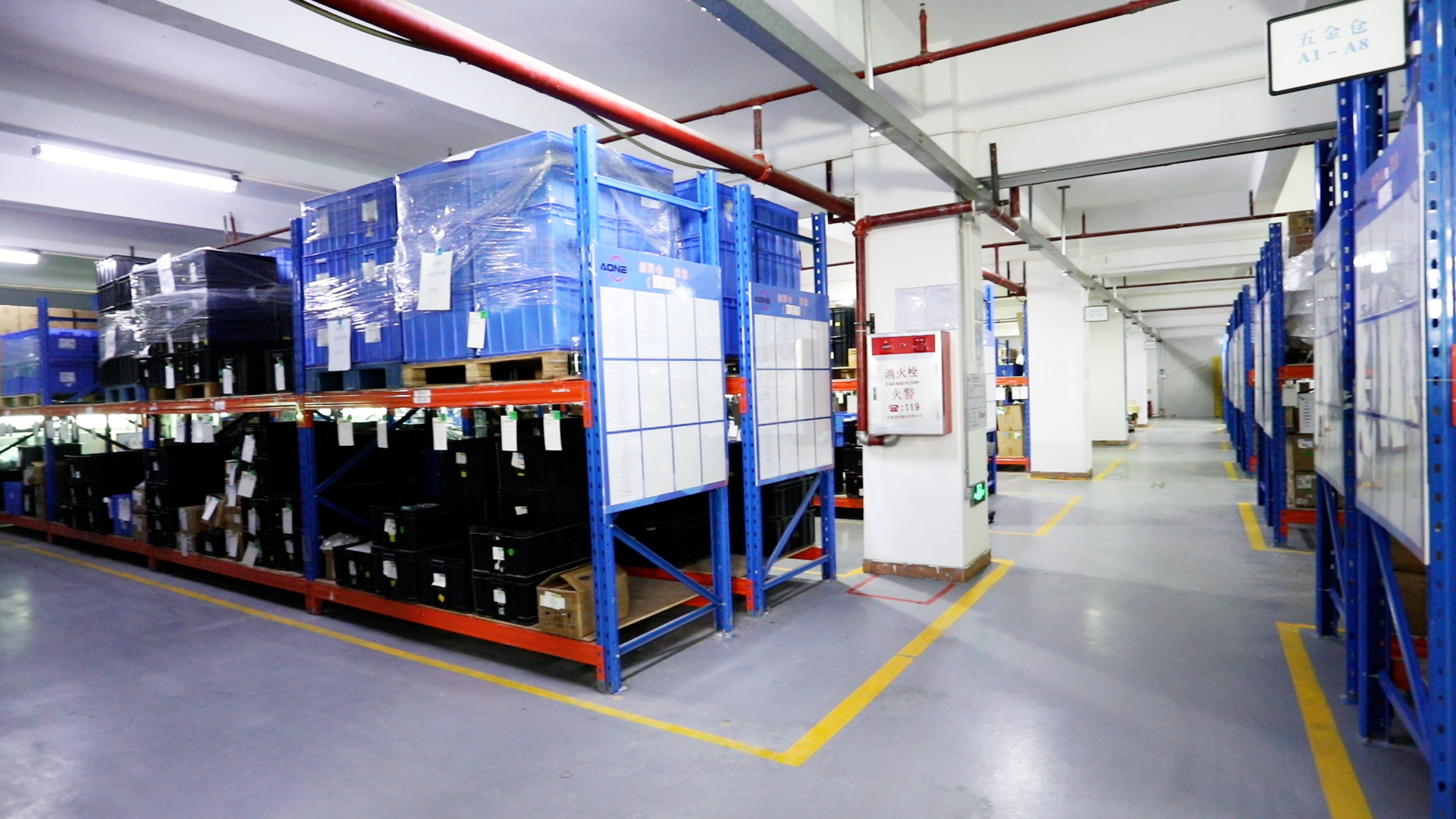
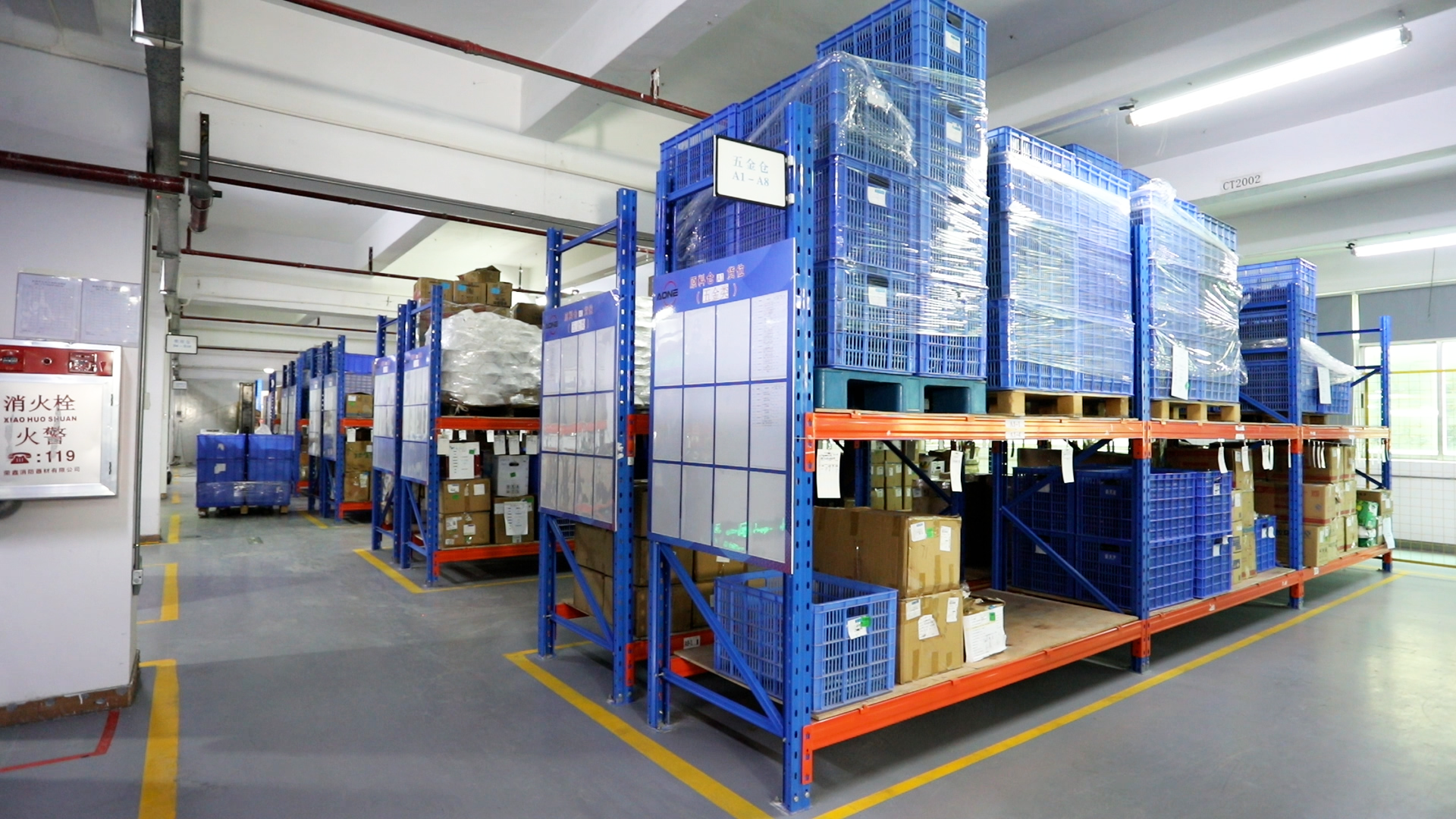
To achieve this, A-ONE introduced an ERP system in 2021 to manage all OEM/ODM orders through a standardized and data-driven workflow. From raw material purchasing to warehousing, production, and final shipment, every step is coordinated within the system to ensure smooth and reliable order fulfillment. Because raw material data is the foundation of ERP accuracy, inventory verification is especially important. Our warehouse team conducts full physical stock counts twice a year—at mid-year and year-end—along with monthly cycle counts. Employees from other departments also participate in the process, helping us keep physical inventory aligned with ERP records at an accuracy rate of 98% or above.
Today, we will take you behind the scenes of a real lighting factory. Let’s look at our mid-year inventory count—the ultimate safety net for our supply chain. Here is how our rigorous system ensures that every single light you receive is fully traceable.
Which Departments Take Part
To ensure a fast and high-quality count, our team plans ahead. Multiple departments work closely together:
- PMC (Production & Material Control): Acts as the supply chain "coordinator." PMC confirms order deliveries, freezes production plans before the count, and coordinates with external sub-contractors.
- Procurement: Recovers outstanding materials and isolates new incoming shipments during the count to keep data clean. They also work with suppliers to check sub-contracted materials and tooling.
- Production: Handles workshop clearing. They must move finished goods to the warehouse and return excess materials or defects before the count starts. On the final day, they count work-in-progress (WIP) items and remaining floor stock.
- Warehousing: The main force of the operation. They organize materials, match stock cards with physical items to ensure a tidy floor, and log all data.
- Finance: Acts as the "supervisor." Finance closes the system books, prepares inventory tags, conducts random spot-checks, and leads the final discrepancy analysis.
- Additionally, Sales ensures all pre-count shipping orders are fully closed. HR handles fixed assets, while Procurement and PMC verify tooling lists with suppliers.
Thanks to this teamwork, all material sorting and paperwork are completed right on schedule.
Pre-Count Preparation: The 15-Day Countdown
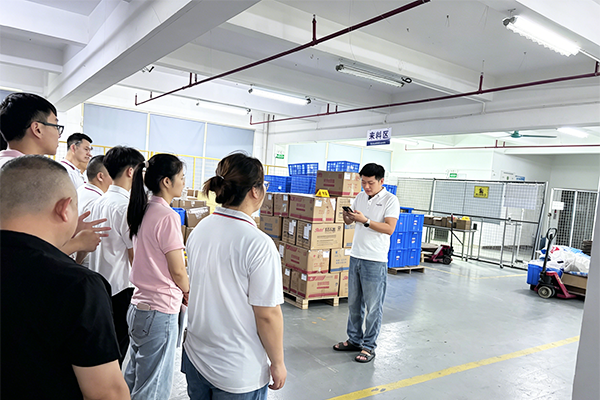
Many people think an inventory count is just grabbing a clipboard and counting boxes. In reality, a high-quality audit begins two weeks in advance. Using June as our baseline, we break the preparation down into four key phases:
Phase 1 (Days 10–12 Before Count): Order Confirmation & Plan Freeze
On June 18th, PMC hosts an order review meeting with Sales, Production, Procurement, and Warehousing. They check delivery dates, adjust schedules, and verify material availability. This meeting effectively halts extra business: any order that can be shipped must go out before the count. Orders that cannot be shipped are rescheduled to avoid any "pending" shipments during the audit.
Following this, PMC issues the finalized production and warehouse plan for the rest of the month and the first week of the next month.
Phase 2 (Days 5–7 Before Count): Material Push & Clearing Shortages
By the 25th, Procurement clears all pending material shortages from suppliers. Any urgent shipments arriving during the count are counted and stored separately as "Post-Count Materials." These are not entered into the ERP system until the count is fully complete.
By the 26th, the warehouse completes all material staging for scheduled production and flags any remaining shortages.
Phase 3 (Days 2–3 Before Count): Floor Clearing & Document Closure
By the 27th, Production returns all excess items and defective materials to the warehouse. When the official count begins, only active work-in-progress (WIP) items remain on the factory floor.
The warehouse logs these returns immediately. They also organize remaining inventory so that the same part number is never stored in multiple locations, preventing double-counting or omissions. Every item must have a stock card that matches the physical product details perfectly.
Phase 4 (1 Day Before Count): System Freeze & Tag Preparation
On the 29th, Finance reviews all system pending documents and cancels any expired production or purchase orders. By the end of the day, Finance freezes the ERP system. No further stock movements or entries are permitted until the count is officially finished.
The Goals of the Count
We run large-scale inventory counts to achieve four core goals:
- Verify System Accuracy: Ensure physical stock matches our ERP records exactly, removing the risk of phantom inventory or hidden material shortages.
- Align Financial and Physical Records: Match our financial asset records with the physical warehouse ledger to secure company assets.
- Resolve Discrepancies: Analyze any variances (such as unrecorded material issues or data entry errors) and make necessary accounting adjustments.
- Secure Mid-Year/Year-End Financial Data: Confirm the exact value of our current inventory assets. This provides a clean data foundation for future purchasing, auditing, and production planning.
The Inventory Count Process
Our mid-year count takes three days and is divided into two main stages:
Days 1 & 2: Full Raw Material Warehouse Audit
This is the largest and most time-consuming part. Every morning begins with a briefing by the Finance team to set the rules.
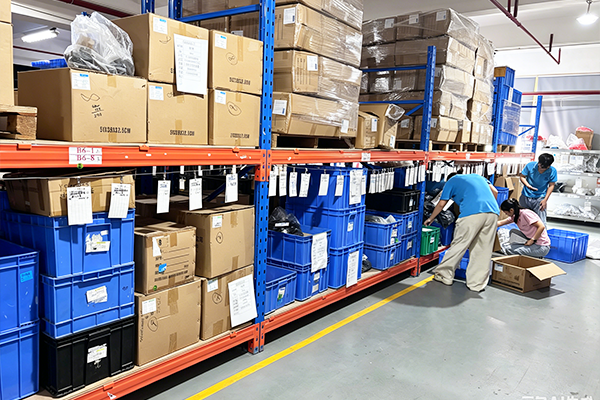
We use a two-person team system: one person counts, and one person records. A warehouse keeper counts the items, while an IQC (Incoming Quality Control) inspector records the numbers, fills out the inventory tag, and glues it to the stock batch. This ensures no one estimates or copies old ledger numbers. Every figure comes from a fresh physical count.
Finance audits the floor throughout the day, checking the tags and doing random blind spot-checks to guarantee accuracy.
Day 3: Workshop, Fixed Assets, and Sub-contractor Auditing
Multiple teams work in parallel on the final day
- Production: Counts all work-in-progress (WIP) items on the floor using electronic scales for smaller parts, then submits the data to Finance.
- HR: Audits all fixed assets across the factory, updates asset tags, and revises the master asset list with Finance.
- Procurement & PMC: Inventories all tooling (including client-owned molds) and verifies outsourced material balances with sub-contractors.
Data Entry & Final Review (Day 3 Afternoon)
14:30 – The warehouse team enters all physical counts into the ERP system and submits the final report to Finance.
17:30 – Finance holds a wrap-up meeting with Warehousing, Production, R&D, Procurement, and Management. The team reviews variances, schedules target recounts if needed, and sets a timeline for final accounting adjustments.
Why Does This Matter for Our European Clients
How does an internal factory audit affect your projects in Europe or the UK? It directly impacts your project timeline and bottom line:
Zero Delivery Delays for Peace of Mind
European commercial and architectural projects have strict deadlines. If a factory has inaccurate records and notices a missing part right before production, your project gets delayed. Accurate inventory counts keep our production schedules predictable and reliable.
Strict Quality Control and Traceability
Overseas contractors demand fully compliant and traceable products. During the count, we perform a quality sweep to check for things like housing oxidation or compromised anti-static packaging. Sorting chips and drivers properly ensures perfect color consistency (SDCM < 3) and full batch traceability for your finished LED lights.
Better Cost Control for Competitive Pricing
Skipping inventory counts leads to hidden costs from dead or obsolete stock. Regular counts help us clear slow-moving materials and improve cash flow. This lean management allows us to offer more competitive and flexible pricing on large volume OEM/ODM inquiries.
FAQ
Q1: What do these key lighting inventory terms mean?
SKU (Stock Keeping Unit): In a lighting factory, a single downlight body can yield dozens of SKUs based on color temperature (3000K/4000K/6000K) or dimming drivers (DALI/Triac). We count strictly by individual SKU.
Slow-Moving Materials: Lighting parts or accessories that have sat in the warehouse for over 3 to 6 months without use. Identifying these is a major goal of the count.
Q2: What are "outsourced processing materials" in the count?
These refer to materials sent to subcontractors for external processing, divided into two categories:
A. Raw Materials: This refers to raw parts (like protection boards) sent to subcontractors for SMT assembly. Even if the subcontractor has already processed them into semi-finished or finished products, they are still counted as "Raw Materials" in our inventory records.
B. Semi-Finished Goods: This refers to semi-finished items sent to subcontractors for secondary processing, such as spot welding.
Q3: How many days does the stock take?
Days 1–2: Focused entirely on a thorough count of the raw material and finished goods warehouses, using a two-person check system.
Day 3: Dedicated to floor WIP, fixed assets, external tooling, sub-contractor balances, and final financial spot-checks and ERP data logging.
Q4: How do you balance the books after the count?
Step 1: Recounting – We double-check any items showing large differences.
Step 2: Variance Analysis – Management and department heads meet to review why differences occurred and set an adjustment schedule.
Step 3: Book Adjustment – For clear errors, we issue correction documents. For unresolved variances, Finance creates an official variance report to adjust the ERP system, ensuring our digital stock matches the warehouse floor perfectly.
Partner with a Manufacturer You Can Trust
A rigorous inventory system shows a manufacturer's commitment to certainty. With this system, your order schedules will not be derailed by sudden material shortages. Your delivery dates are backed by accurate data, and every light you receive is fully traceable.
At A-ONE LED, we focus on both production scale and supply chain transparency. If you are looking for a reliable lighting manufacturer, feel free to contact us today.
 How a Chinese Downlight Manufacturer Guarantees 35-Day Delivery: Inside A-ONE


 2F, Building 2, Zhongda Industrial Park, Dongshan Industrial Street, Zhangmutou Town, Dongguan, Guangdong 523619, China