 Home
HomeHow to Choose the Right Beam Angle for Your Lighting Project
 A-ONE Manufacturer
 Apr 08,2026

Beam angle is a fundamental concept in modern lighting design. If you want to avoid common pitfalls, choosing the right beam angle is very important. This helps prevent bright projects that lack focus. It also stops some areas from being over-lit. Other areas will not stay in dark shadows. It directly impacts a space's functionality, visual aesthetics, and user comfort. Mastering beam angle knowledge helps you deliver professional solutions for end users. It also shows your product’s strengths and improves your project’s competitiveness.
What is a Beam Angle
Definition
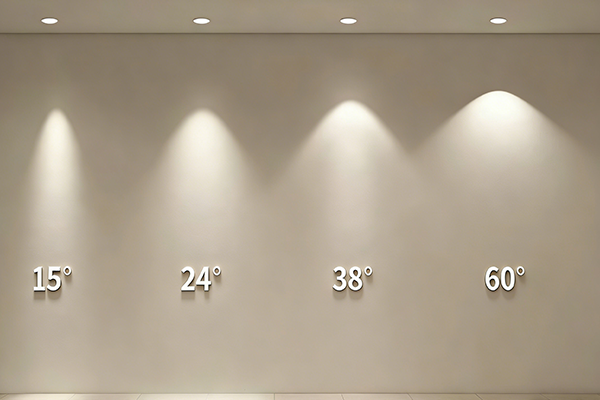
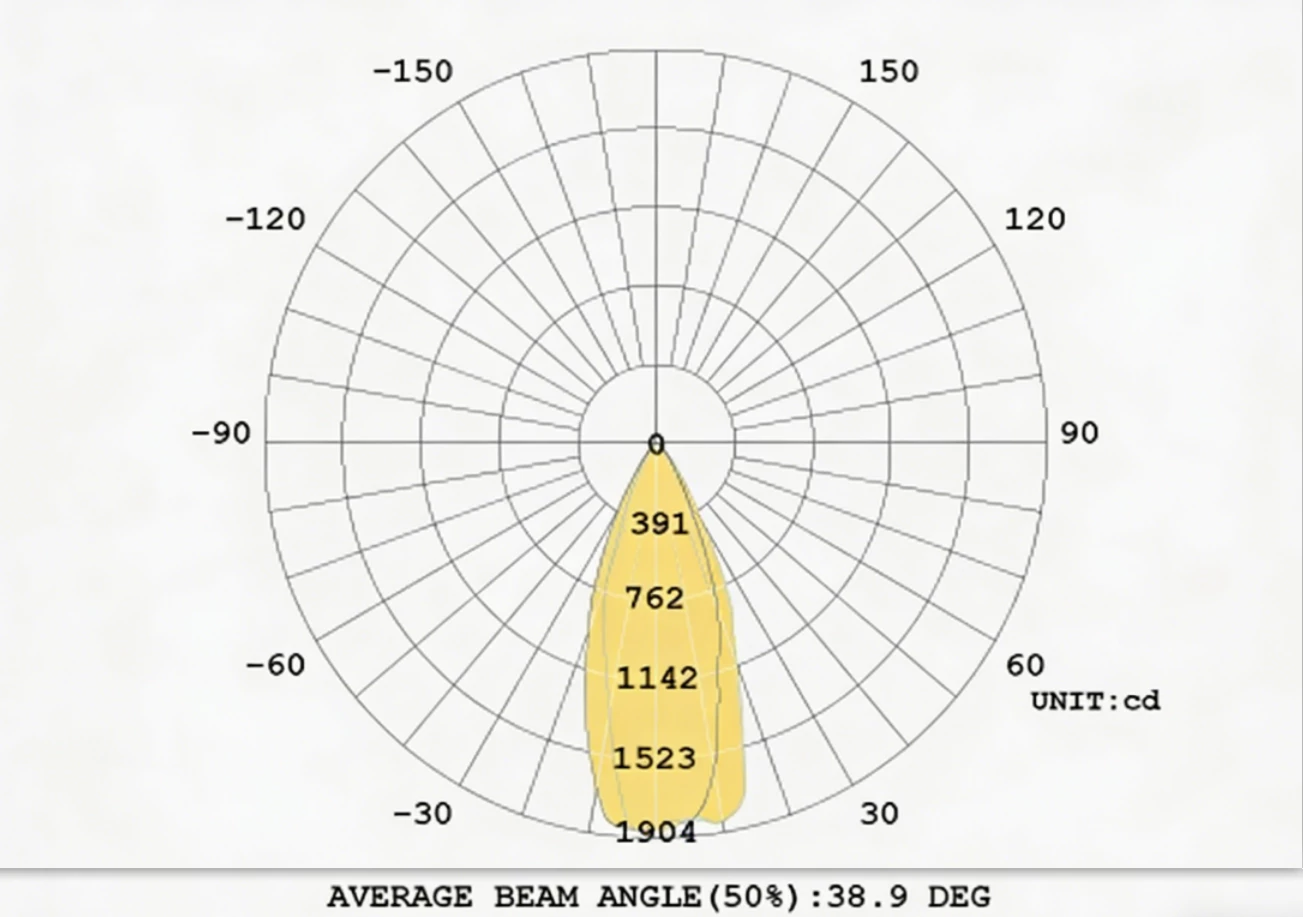
The Beam Angle, also known as beam width or beam spread, is the measurement of how light is distributed from a light source. Specifically, it is the angle at which the light intensity drops to 50% of its maximum brightness. Measured in degrees (°), it determines how concentrated or spread out the light will be.
In practical design, the beam angle is more than just a technical spec; it is the core factor that dictates lighting quality. Alongside luminous flux, color temperature, and CRI, it determines the visual hierarchy and functional suitability of a space.
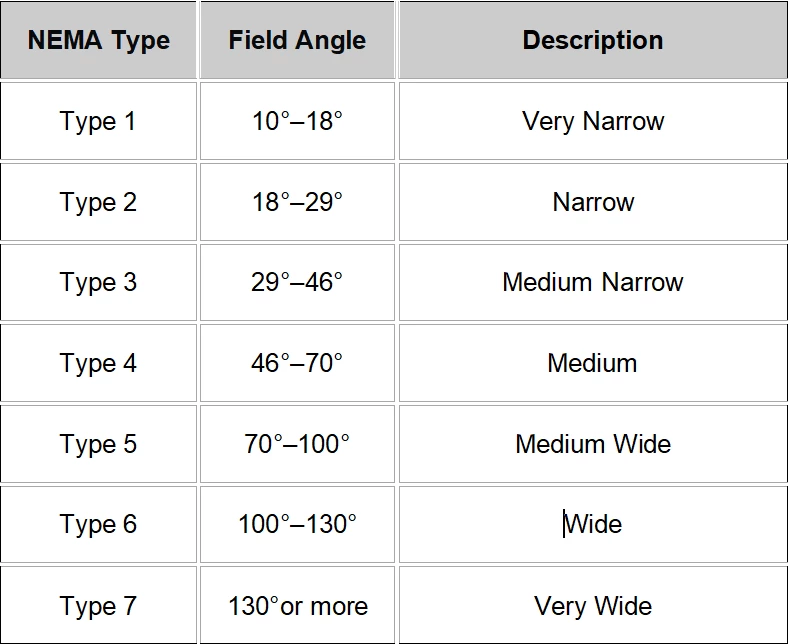
NEMA Classification Standards
Organizations like the National Electrical Manufacturers Association (NEMA) have established standards for light classification. While NEMA types are often used for outdoor or high-power applications, the logic is equally applicable when selecting indoor LED fixtures.
The Role of Beam Angle in Different Lighting Layers
Lighting design is typically categorized into three layers: Ambient Lighting, Task Lighting, and Accent Lighting. The beam angle plays a distinct role in each.
Ambient Lighting
Designed to provide uniform base brightness for safety and general visibility. Wide beam angles (60°–120°) are preferred here, as they spread light evenly, reduce shadows, and create a soft, welcoming atmosphere.
Task Lighting
Targets specific work areas like desks, kitchen counters, or reading nooks. Medium to narrow beam angles (25°–60°) work best. They focus light on the task surface. This boosts local illuminance (e.g., 500 to 750 lux). It does this without disturbing the surrounding area.
Accent Lighting
Used to highlight specific objects, artwork, or architectural details to create a focal point. Narrow beam angles (10°-30°) are ideal for creating high-contrast "spotlight" effects that draw the eye.
How Light Distribution Impacts Overall Design
The way light is distributed influences several key project dimensions:
Fixture Quantity and Placement
Narrow beam angles cover less area, requiring more fixtures or more precise positioning to achieve uniformity. Conversely, wide angles can reduce the total number of fixtures needed, simplifying the layout. In commercial spaces with high ceilings, narrow-angle high bays can reduce installation points and lower costs.
Brightness and Uniformity
The right angle balances peak brightness with average illuminance, avoiding "hot spots" or dark zones. According to the uniformity formula, wider angles improve uniformity, while narrow angles increase local peak intensity. In the European market, optimizing beam angles is a key strategy for reducing energy consumption under eco-design regulations.
Space Atmosphere
Beam angles define the contrast between light and shadow. Wide angles create an open, relaxed feel, which is perfect for home lounges. Narrow angles add drama and exclusivity, which suits high-end restaurants or retail displays.
Additionally, beam angles affect glare control (UGR values), overall lighting efficiency, and maintenance considerations. Selecting the wrong light distribution can waste energy. It can also make it harder to meet EU Ecodesign energy efficiency rules. It may also prevent full project compliance.
Scenario-Specific Requirements
Commercial Scenarios
Exhibitions & Galleries
The goal is to make exhibits "pop" while protecting sensitive items. We recommend narrow beam angles (15°-30°) paired with tiltable fixtures. This enhances the three-dimensional feel and visual impact of the display.
Retail & Malls
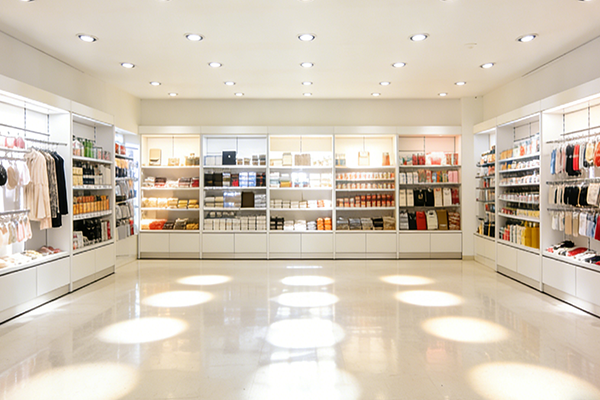
These spaces require a layered strategy. Use narrow to medium-narrow angles (20°–40°) on shelves and window displays to highlight product textures. Use wide angles (60°–90°) in aisles to ensure safe, even lighting.
Hospitality (Restaurants & Bars)
Use medium-wide angles (50°-80°) for general lounge areas to create warmth. Over dining tables, use medium, narrow angles (30°-45°) for focused light. This highlights the food and controls glare for diners.
Residential Scenarios
Living Rooms
Wide beam angles (60°-120°) are best for a relaxed, open atmosphere suitable for family gatherings.
Bedrooms
Use medium to wide angles (50°-90°) for general comfort. For bedside reading, switch to narrow or medium angles (20°-40°) for precise lighting that won't disturb a sleeping partner.
Kitchens
Use a medium beam angle (25°–45°) for islands and countertops to ensure bright, shadow-free workspaces. For general lighting, a medium-wide angle (50°–80°) balances functionality with style.
Other Areas (Hallways, Corridors, Bathrooms)
A medium-wide angle is ideal for hallways and corridors to ensure safe passage. For bathroom mirrors, a medium-narrow angle is best to prevent glare and shadows.
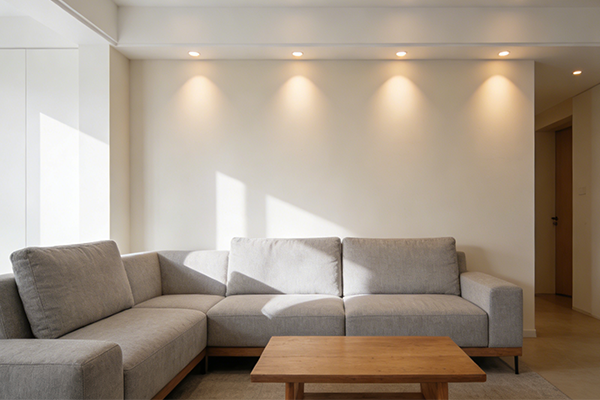
Even with technical definitions and charts, many designers and contractors face confusing moments on-site. You may have seen these questions on Reddit’s r/Lighting or on DIY forums. People ask, “Why does my room feel dark even with high-lumen lights?” Others ask, “Why does this downlight blind me when I’m at my desk?” Usually, the culprit isn't the wattage or the brand—it's a subtle mismatch in the beam angle geometry. Here’s how to avoid the most talked-about pitfalls.
One of the most often overlooked aspects is the link between beam angle and glare (UGR). This is common in European open-plan kitchens and home offices.
- The Reddit Scenario: A user complained that their new 500lm kitchen downlights felt "harsh" and caused eye strain when seated at the breakfast bar.
- The Issue: A narrow beam (for example, 25°) placed right over a seating area makes light cut across your line of sight. It does not wash the work surface softly.
- Pro Tip: In areas where people sit or stand for long periods, use a medium-wide beam (60°+). It improves visual comfort. If you need task intensity, aim for higher lumen output with a wider optic, rather than a narrow "spotlight" beam. This maintains high lux on the counter while keeping the source gentle on the eyes
A common complaint on DIY forums is the "scalloped" or "dashed" light effect on walls in narrow corridors.
- The Zhihu/Forum Dilemma: People often install 38° downlights in a 2.7m hallway. They then see bright spots on the floor. Dark bands appear between the spots. This can make the hallway feel smaller.
- The Geometry Fix: Beam angle selection is height-dependent. A narrow beam drops like a column—great for high ceilings (4m+) but useless for spreading light in standard 2.4m–2.7m European heights.
- Calculation Insight: As a rule of thumb, a 60° beam angle at a 2.6m height casts a floor cone roughly 3.0m wide. Using this wider angle in corridors improves uniformity. It also reflects more light off walls. This makes the ceiling feel higher. It also makes the space feel more generous. You can use fewer fixtures while achieving safer, more even illumination.
It’s also worth noting a technical detail that often confuses specifiers when comparing datasheets from different regions. How is the beam angle measured?
- Technical Distinction: In Europe (CIE standards), beam angle is defined by where intensity drops to 50% of maximum. In North America (IES), it's often 10% .
- Why It Matters to You: A 38° fixture under European standards will look wider and softer. An American “38°” fixture will look like a narrow spotlight.
- Actionable Takeaway: When selecting products for the UK and EU market, trust the CIE 50% metric. This is why a 40° beam is often the "workhorse" in European home design. It gives a wide, useful wash that many European buyers expect. It also avoids the harsh "tunnel vision" of tighter optics.
Given the variables above, the most common "wish" voiced by installers is for on-site adjustability. Many have faced the frustration of a fixed 25° beam hitting a joist instead of the painting it was meant to highlight.
- The Fix: Tiltable downlights with interchangeable reflectors (for example, swapping from 38° to 60°) help installers. They can fix architectural quirks without changing the fixture housing. This is particularly valued in renovation projects across Europe where ceiling layouts may be irregular .
- Product Alignment: (This is where you seamlessly tie back to A-ONE's offering mentioned in the original text). This is why our All-in-One Downlight series uses field-changeable optics. It gives the trade power to solve problems in real time.
Our Solution: Flexible and Versatile
In summary, while commercial lighting demands hierarchy and guidance, residential lighting focuses on comfort and adaptability. A-ONE ’s All-in-One Downlight is designed to meet these diverse needs.
Most models in this series support customizable beam angles (e.g., 38° narrow or 60° wide) and offer both fixed and tiltable designs. This versatility allows you to adapt to any installation environment on-site, significantly increasing project flexibility. Combined with easy installation and low maintenance, our products fully comply with modern UK and European energy standards.
With 18 years of manufacturing expertise, we offer professional OEM/ODM services for European brands, wholesalers, and contractors. We are here to help you respond quickly to your clients’ needs. We offer efficient, high-quality lighting solutions for every project.
 What is Lux and Why It Matters for Lighting Projects ?


 2F, Building 2, Zhongda Industrial Park, Dongshan Industrial Street, Zhangmutou Town, Dongguan, Guangdong 523619, China