 Home
HomeHow Sensors and Smart Lighting Enable Energy-Efficient LED Solutions
 A-ONE LED Lighting
 Feb 02,2026

In 2026, the global energy landscape is undergoing an unprecedented transformation. For the UK and European markets, volatile energy prices and rising carbon taxes have made building energy management a top priority for lighting wholesalers, distributors, and contractors. From a sustainability perspective, energy-efficient LED solutions are no longer an option—they are a necessity.
Guided by the EU Green Deal and the UK’s updated Building Regulations (Part L), reducing carbon footprints is not just a legal requirement but a key driver incentivizing businesses to switch to high-efficiency and smart lighting solutions. With 18 years of experience in lighting manufacturing, we have seen technology evolve from simple illumination to "smart control." This article explores how motion sensors and the Tuya Smart ecosystem use automation and precision to slash energy consumption and achieve carbon neutrality.
The Strategic Value of Energy-Efficient Lighting
When recommending products, wholesalers and contractors should focus on "Long-term Value" rather than just the initial price point.
1. Drastic Cost Reduction: Lighting accounts for 15–35% of energy bills in European commercial buildings. Sensors and smart dimming can reduce this by 50% to 70%, offering a rapid Return on Investment (ROI) for warehouses and car parks.
2. Regulatory Compliance: With the UK aiming for Net Zero by 2050, distributors offering products with high-efficiency certifications (such as the new ErP ratings) gain a competitive edge in government and large-scale commercial tenders.
3. Increased Asset Value: Smart upgrades increase rental yields and improve occupant comfort, modernising older buildings for the digital age.
Motion Sensors
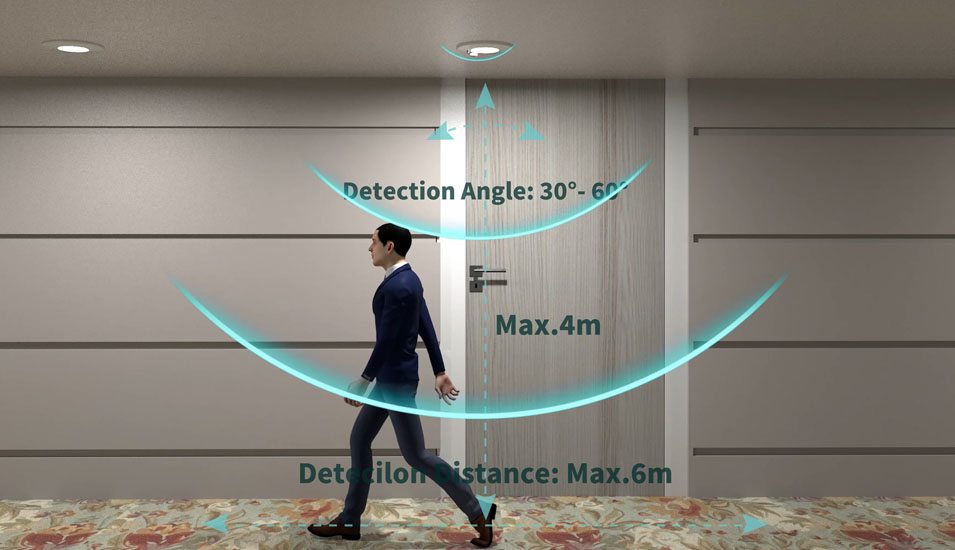
To achieve energy-saving lighting solutions, motion sensors are a vital entry point for lighting design. Currently, the two mainstream technological paths on the market are: Infrared (PIR) sensing and Microwave sensing.
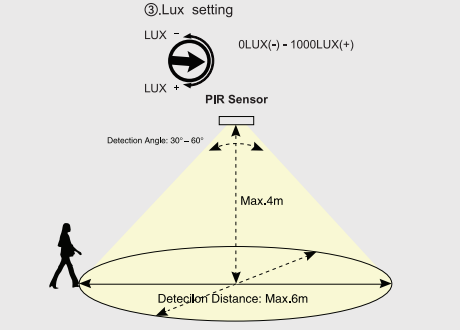
PIR (Passive Infrared): The Precision "Heat Detector"
PIR sensors detect changes in infrared radiation (heat) from the human body.
- How it works: When someone enters the detection zone, the light switches to full power.
- Advantages: Extremely low standby power (<0.2W) and "defined boundaries." Since PIR cannot penetrate walls, it prevents false triggers, making it ideal for confined spaces.
Microwave Sensors: The Sensitive "Doppler Radar"
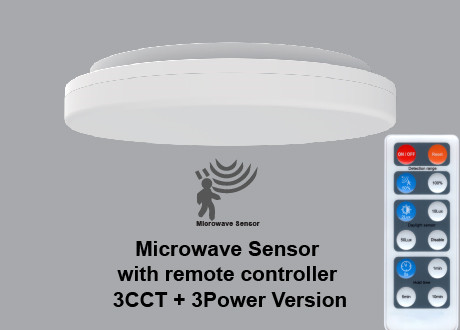
Microwave sensors emit high-frequency electromagnetic waves and analyze the “reflected signals”.
- How it works: They detect motion based on frequency shifts. With a detection range of 8–15 meters and the ability to penetrate thin walls or covers, these sensors allow for integrated, "all-in-one" luminaire designs.
- Energy Logic: Modern microwave controls often use a "100% - 10% - 0%" sequence. The light dims to a 10% safety level after people leave before turning off completely, balancing safety with maximum savings.
The Tuya Smart Ecosystem: Proactive Management
While infrared sensing is 'passive,' the Tuya ecosystem offers 'active management.' It digitizes control from individual lamps into coordinated systems, delivering a more refined, high-efficiency experience for both energy savings and comfort.
- Multi-Protocol Connectivity: Supports Zigbee, Bluetooth Mesh, and Wi-Fi, allowing control via the Tuya Smart or Google Home apps.
- Scheduling Strategies and Daylight Harvesting: Scheduling allows for custom daily/weekly plans. The system supports "Daylight Harvesting": window-side lights dim to 30% when ambient light is sufficient, while interior areas stay at 80%. This precision is impossible with traditional lighting.
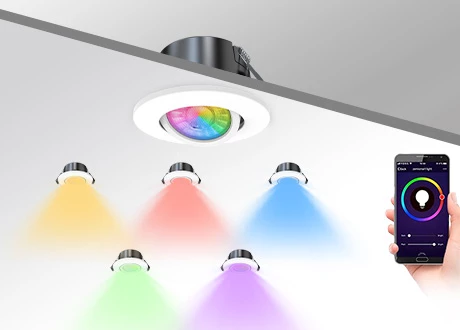
- RGB+CCT Versatility: Smart downlights offer 16 million colors and adjustable white tones (Warm to Cool). In retail settings, this guides customer flow through color cues while maintaining a high Color Rendering Index (CRI).
Application Scenarios & Control Strategies
By applying motion sensors and Tuya systems to specific scenarios, we maximize energy savings while ensuring optimal comfort.
Zonal Control: PIR Sensor Downlights
- Applications: Home corridors, public restrooms, hotel entrances.
- Logic: PIR sensors suit short-stay areas. Their inability to penetrate doors prevents "false triggers" from outside, ensuring precise energy savings.
- User Experience: Provides a sense of security while avoiding frequent switching that could shorten the lifespan of LED chips.
Large-Space Efficiency: Microwave Sensor Ceiling Lights
- Applications: Underground car parks, stairwells, logistics warehouses.
- Logic: The penetrative power of microwave sensors enables "pre-lighting" before a vehicle enters a bend, significantly enhancing driving safety.
- Cost Analysis: Compared to always-on lighting, this setup drastically cuts annual electricity expenditure per lamp.
System-Level Fine Control: Tuya Smart RGB Downlights
- Applications: Living rooms, upscale restaurants, flagship brand stores.
- Logic: Group control allows dozens of downlights to be divided into scenes. Scheduled tasks automatically adjust brightness for business hours, cleaning, or security patrols.
- Low-Carbon Benefits: Beyond scheduling, studies show that Daylight Harvesting can save over 30% on daytime energy in commercial buildings.
Featured Energy-Saving Products
Our energy-efficient LED lighting designs are mature. On this foundation, we have integrated additional functional designs to provide a more reliable, convenient, and efficient lighting experience. Here are some of our popular products:
1. PIR Multi-functional LED Downlight (DL190S): 6m detection radius, 4CCT adjustable (2700K-5700K), and a high 100lm/W efficacy.
2. Microwave Sensor Ceiling Light (CL42-SN): IP54 rated with a 90-minute emergency backup, 110lm/W efficacy, and full ErP certification.
3. Smart RGB Adjustable Downlight (DL92pro): WiFi/Bluetooth dual-mode, 25° tilt for precision aiming, and full Tuya integration (RGB+CW+WW).
Conclusion: Embracing a Low-Carbon Future
Energy efficiency is no longer just a policy slogan; it is a core metric of market competitiveness. By integrating PIR, Microwave, and Tuya Smart technologies, we provide more than just luminaires—we provide cost-effective, sustainable environments for the modern world.
 Ideal CRI for LED: Why It Matters?


 2F, Building 2, Zhongda Industrial Park, Dongshan Industrial Street, Zhangmutou Town, Dongguan, Guangdong 523619, China