 Home
HomeWhy Do Downlights Need Salt Spray Testing?

 Apr 22,2026

Even indoor downlights must be salt spray tested. Many B2B buyers think "indoor lights don't need corrosion protection." But after 1-2 years, problems show up: white rust on the aluminium housing, corroded screws, and water leaking into the luminaire. This leads to project rework and warranty disputes. As a factory focused on B2B indoor downlights for 18 years, we see salt spray testing as a necessary step before production. We generally recommend at least 48 hours.
However, if the lights are installed under a roof eave in Europe, 48 hours of testing is not enough. Wind, rain, and salty air will speed up corrosion on the aluminium housing. So for eaves and semi-outdoor areas, we recommend downlights that can pass 500 hours of salt spray testing. This is a much more reliable solution.
What is Salt Spray Testing
Definition
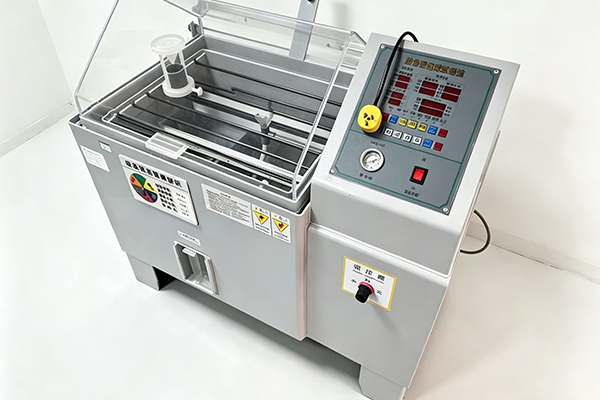
Salt spray testing is a lab method that speeds up corrosion. It helps evaluate how well metal materials, coatings, and lighting parts resist corrosion in a salty environment. The test uses a closed chamber that continuously sprays a 5% sodium chloride (NaCl) solution at a constant 35°C. This creates a neutral salt spray (NSS) that quickly simulates coastal, marine, or industrial corrosive conditions.
Key International Testing Standards
ASTM B117 (US standard)
This is the most widely used salt spray standard. It has been the benchmark since 1939. It sets the salt solution (5% NaCl), pH (6.5–7.2), temperature (35±2°C), and spray rate (1–2 ml per 80 cm² per hour). The test runs continuously to provide repeatable results for comparison. Note: the results do not directly translate to real-life lifetime, but they effectively differentiate surface treatments.
ISO 9227 (International standard, same as China GB/T 10125)
This standard is more flexible. It includes three variations: neutral salt spray (NSS), acetic acid salt spray (AASS), and copper-accelerated acetic acid salt spray (CASS). NSS has basically the same conditions as ASTM B117 and is suitable for metals, coatings, and anodised layers. ISO 9227 also requires verification of the test cabinet’s corrosivity and allows test durations to be chosen by product specs (common durations: 2h, 24h, 48h, 96h, 240h, 480h, 720h, 1008h, etc.).
IEC 60598 (General standard for luminaires)
This is the core safety standard for lighting globally. It does not mandate a specific salt spray duration, but it requires luminaires to maintain mechanical strength, electrical insulation, and IP protection in humid and corrosive environments. Many EU project tenders ask for a salt spray report, especially when referring to the corrosion resistance clauses in EN 60598-1.
Rating Standards – How to Judge the Corrosion Level
Salt spray testing is not just a simple “pass/fail”. You need a standard rating system to measure the corrosion results. The two most common standards in our industry are:
ISO 10289 – for rating coatings on metal substrates
ASTM D1654 – for rating creepage from a scribe line
For indoor downlights and eave downlights, we recommend meeting the following criteria:
|
|
Rating Item |
Required Level |
Meaning |
|
|
Protection rating (Rp) |
≥ 8 |
Corroded area < 0.25%; only a few tiny, scattered rust spots allowed |
|
|
Appearance rating (Re) |
≥ 8 |
No visible blistering, peeling, discolouration, or exposed base metal |
|
|
Scribe creepage (ASTM D1654) |
≤ 1.5 mm (one side) |
Corrosion creep from a pre-made scribe must not exceed 1.5 mm per side |
In addition, we also do visual checks (whole luminaire, screws, sealing rings), weight loss measurement, and microscopic inspection (pit depth). This makes sure that all metal parts – not just the housing, but also mounting springs, screws, and driver pins – meet the corrosion requirements for the intended application.
Recommended Salt Spray Test Durations for Different Applications
Test duration should match the application, climate, and warranty requirements. Based on our experience, we recommend the following:
| Application | Suggest Duration | Field Correlation | Luminaire Type | Typical Region |
| Indoor | ≥ 48 h | 2–5 years | Domestic downlights | B2B projects, CE requirements |
| Bathroom high humidity | 72–100 h | 5–8 years | IP65 downlights | Humid indoor environments |
| EU eaves / semi outdoor | ≥ 500 h (best) | 10–15 years | Lights for balconies, corridors | European tenders, coastal city projects |
| Coastal high salt | 500–1000 h | 10+ years | High-end downlights | Mediterranean, Nordic coasts |
| Outdoor / marine | 1000+ h | 15+ years | Street lights, floodlights | Industrial / marine environments |
These recommendations are based on long-term industry practice. They help wholesalers and contractors choose the right level for each project – avoiding both unnecessary test costs and corrosion problems later.
Why Do Indoor Downlights Need Salt Spray Testing
Many overseas buyers underestimate indoor corrosion risks. That is exactly where we see a market gap. As a factory specialising in indoor downlights, we have identified four key reasons:
Indoor corrosion risks are seriously underestimated
Even without direct seawater, indoor environments have hidden corrosion. Bathroom steam, kitchen fumes, AC condensation, and cleaning agents all carry corrosive elements. These cause pitting on aluminium and rapid rusting on screws (especially carbon steel or low-alloy steel), leading to seal failure and water ingress. In Europe’s humid climates (e.g. the UK), these problems get worse. Within 1–2 years, you can see white rust, blistering, or fogging inside the luminaire.
Aluminium die-cast housings and surface treatments can fail easily
Most downlights use die-cast aluminium (e.g. ADC12). The surface is usually powder coated or anodised. If pre-treatment (degreasing, phosphating) is not done properly, or if coating thickness and curing temperature are not controlled, white rust or yellowing can appear within just 48 hours of salt spray testing. Good quality requires multi-step pre-treatment + high-durability powder coating, and the adhesion and density must be verified by salt spray testing. In Europe’s damp environments, poor surface treatment will greatly shorten the product’s life.
Export compliance and B2B project requirements are getting stricter
Major certifications like CE, UL, SAA, and Energy Star do not yet force a specific salt spray duration. But IEC 60598 and many EU tenders now ask for corrosion test reports. Public building, hotel, school, and office projects in the UK and Europe often require “proof of corrosion resistance” – either explicitly or implicitly. 48 hours is the entry-level. A 100-500 hour report gives you a much stronger position in tenders, and helps avoid customs delays or rejection by the client.
Supporting a 5-7 year warranty – and controlling costs
Industry data shows that poor corrosion protection can cause rework rates of 15-20%. The after-sales cost takes a significant share of the total project budget. Good salt spray testing (48 hours or more) prevents white rust on housings and screw corrosion. It greatly extends the real-life lifetime of luminaires in humid environments. It lowers maintenance frequency and gives your B2B customers a reliable warranty.
Five Real Benefits of 48 Hour Salt Spray Testing for B2B Customers
For lighting wholesalers, distributors, and contractors overseas, choosing downlights that have passed strict salt spray testing is not an extra cost – it is an investment that brings multiple returns:
- Lower after-sales costs by more than 30% – The test finds coating defects early, so you avoid large-scale rework and replacement after installation.
- Increase project acceptance rate by 25% – A professional test report with CMA/CNAS accreditation can be submitted directly to European clients or consultants, speeding up approvals.
- Extend actual luminaire life by 2-3 times – Good corrosion protection keeps downlights stable in high humidity, high chloride environments, reducing light decay and electrical failures.
- Strengthen your brand’s professional image – Providing test reports and before/after photos helps you stand out in tenders.
- Meet hidden requirements in coastal and humid cities – Even if the tender does not mention it, cities like London, Amsterdam, and Hamburg face salt fog or condensation challenges. Testing in advance avoids hidden risks.
Our Factory’s Full Salt Spray Testing Process
We have our own professional salt spray test chamber and a CMA/CNAS-accredited lab. Every batch test is transparent and traceable.
Test batch classification
Standard indoor batch – 48 hours (5% NaCl, 35°C)
European eave and high-end export batches – we can extend to 72h, 100h, 240h, or 500h as requested
Detailed test steps
Step 1 – Sample preparation
Randomly take complete downlights from the current production batch, plus separate key metal parts (housing, screws, outer ring). This ensures the samples are representative.
Step 2 – Salt spray chamber setup
Strictly follow ISO 9227: salt solution concentration 5±1%, pH 6.5-7.2, temperature 35±2°C, spray rate 1-2 ml/80 cm²/h. Place samples at a 15-25° angle to avoid condensed liquid dripping directly onto them.
Step 3 – Continuous spray
Run the spray continuously according to the test category (standard indoor batch = 48 hours; special custom batches can be extended to 72/100/500 hours).
Step 4 – Post-treatment and rating
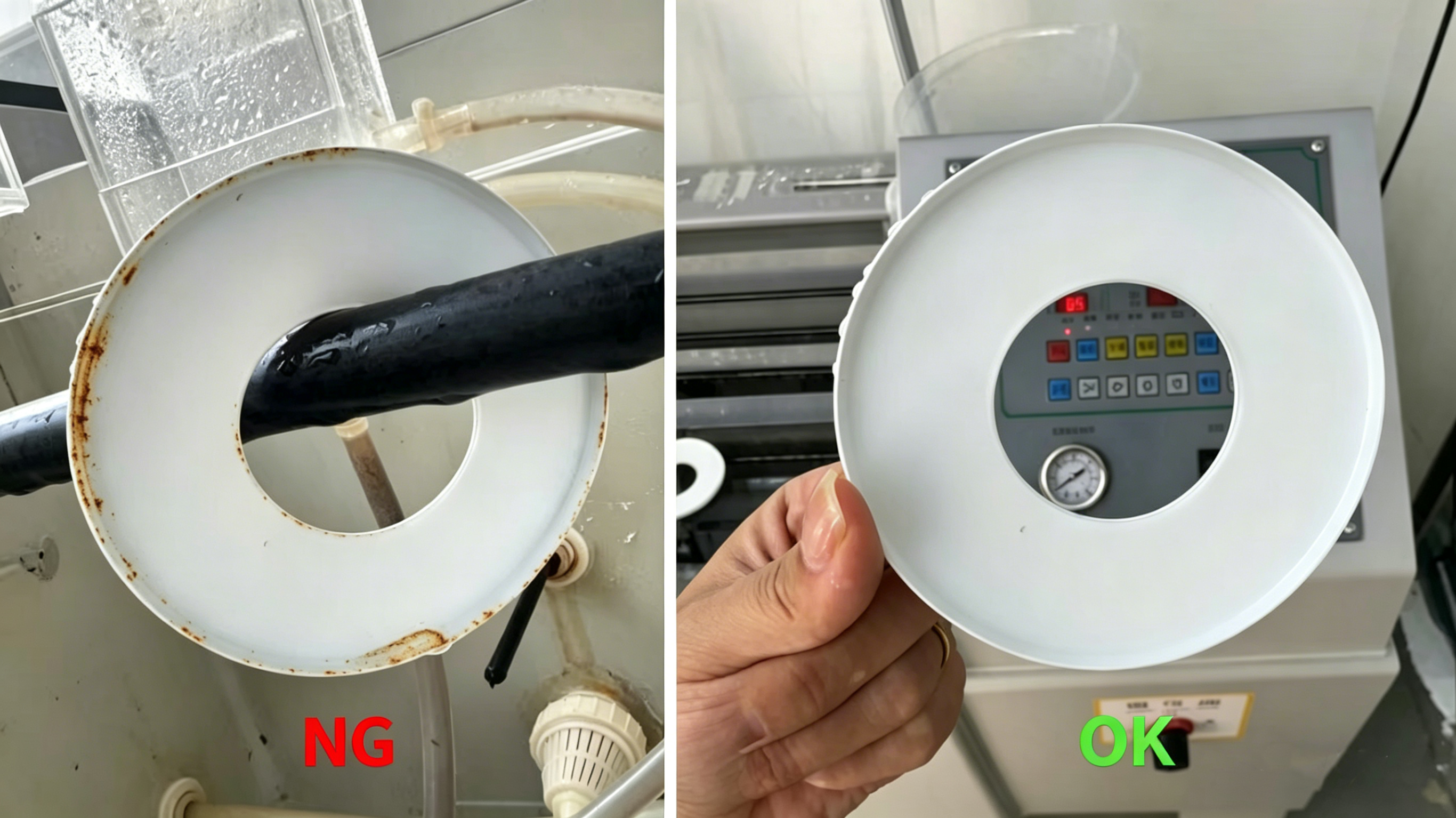
After the test, clean the samples. Rate them according to ISO 10289 and ASTM D1654. We require Rp ≥ 8 (corroded area <0.25%), no visible blistering, peeling, or rusting. We also do visual checks, weight measurement, and microscopic inspection.
Step 5 – Report issuance
We provide a formal test report that includes high-resolution before/after photos, detailed data, rating results, and lab accreditation. The report can be issued in English, ready for European project tenders and documentation.
Buyer FAQ – European focused
Q: How many hours of salt spray testing do downlights for European eaves need?
A: ≥500 hours is best practice. Eaves are semi-protected, but wind-driven rain and salty air still speed up corrosion on aluminium housings. Many EU and UK projects already list 500 hours as a recommended or tender requirement – it reliably simulates long-term use.
Q: My project is 10 km from the coast. Is 48 hours of salt spray testing enough?
A: Not really. For projects within 10 km of the coast, 48 hours is only enough for fully enclosed, air-conditioned dry indoor spaces. If the downlights are installed in naturally ventilated corridors, lobbies, or high-humidity areas, salt can still get in with the air. We recommend at least 240 hours.
Q: What is the difference between 48 hours and 500 hours?
A: 48 hours is for ordinary indoor dry or medium-humidity areas. It verifies basic coating quality. 500 hours is for high-risk semi-outdoor and eave applications. It digs deeper into hidden defects and simulates more than 10 years of real-life exposure. They are very different in terms of durability and risk coverage.
Q: How should I check a supplier’s 500-hour salt spray report?
A: Use this checklist:
Is the test duration clearly ≥500 hours, and does it mention eave or semi-outdoor use?
Is the protection rating Rp ≥ 8? Are there clear before/after photos?
Does the report have CMA, CNAS, or other internationally recognised accreditation?
Does it include full test conditions, batch information, and data curves?
Can the supplier provide real European project examples or long-term customer feedback?
Q: If a luminaire has a high IP rating (e.g. IP65), does that automatically mean it is corrosion-resistant?
A: No. This is one of the biggest misunderstandings in B2B buying. IP rating and salt spray testing address two completely different things :
IP rating (Ingress Protection) tests how well the luminaire is sealed against dust and water getting inside.
Salt spray rating tests the durability of the materials – how well the surface resists chemical corrosion and oxidation.
Q: Besides salt spray, what other environmental tests should I look for when buying downlights for Europe?
A: Europe has a wide climate range (from Nordic cold to southern heat). To support a 5-7 year warranty, three other tests are just as important:
UV ageing test (ASTM G154) – for downlights under eaves or near windows. Strong UV causes poor paint to change colour (white to yellow) or “chalk” and peel within 1-2 years.
Thermal cycling test – Europe has large day night temperature differences. This test makes sure that aluminium, plastic, and lenses do not crack due to expansion/contraction, and that seals stay effective.
IK impact rating – for public B2B projects like schools, hospitals, or stations. IK08 or higher is usually required to resist vandalism or accidental impact.
Closing & Invitation to Cooperate
Salt spray testing for indoor downlights is not “one size fits all”. For ordinary indoor areas, ≥48 hours meets most needs. For European eaves, coastal, or high-humidity projects, you need ≥500 hours to be truly safe.
As a professional factory with 18 years of focus on B2B indoor downlights, we do not just offer high efficiency, well designed thermal management. We also back our products with a strict corrosion testing system. We help lighting wholesalers, distributors, and contractors overseas build lighting projects that stand the test of time and climate.
Choosing reliable corrosion resistance means choosing lower long term costs and higher brand reputation. We look forward to working with you – to provide durable, reliable lighting solutions for European buildings.
 How to Choose a Reliable LED Spotlight Manufacturer?


 2F, Building 2, Zhongda Industrial Park, Dongshan Industrial Street, Zhangmutou Town, Dongguan, Guangdong 523619, China