 Home
HomeWhat Are Ra and R9? Why R9 So Important?

 Apr 15,2026

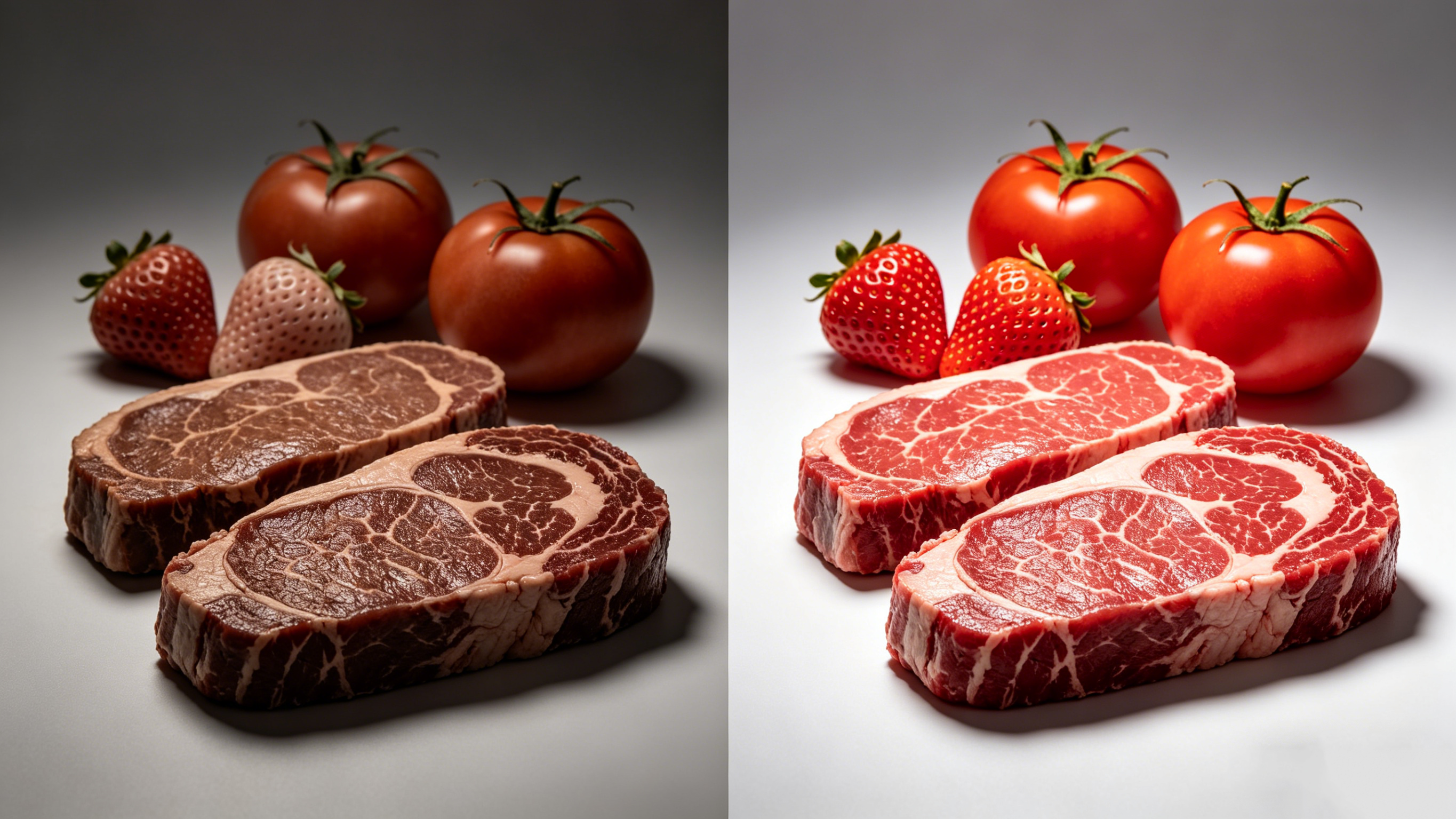
In retail markets across the UK and Europe, fresh meat often appears bright red. Apples look crisp. Tomatoes and strawberries seem vibrant and juicy. Much of this appeal comes from one thing — effective colour rendering by the lighting system. With 18 years of manufacturing experience behind us, we want to unpack two parameters that often get confused in specification sheets — Ra (General Colour Rendering Index) and R9 (Saturated Red Colour Rendering Index), More importantly, we want to explain why R9 is the one that actually sells the product in modern commercial lighting, especially for retail applications.
High-quality lighting is not only about brightness but also about accurately reproducing true colours. In food retail, fashion retail, and high-end homes, light color quality affects how people feel, shop, and view spaces. Many products focus only on Ra while ignoring R9, which can lead to poor red rendering and disappointing results. Below, we explain these parameters to help you make better lighting choices.
What Is Ra – The Misunderstood “Average”
Basic Definition of CRI
When we talk about CRI (Colour Rendering Index), we usually mean Ra. It’s the "General" score. The International Commission on Illumination (CIE) defined 15 standard test colour samples. Ra is the General CRI, the most commonly used value.
How Ra Is Calculated
Ra is the arithmetic average of the first eight test colours (R1 to R8). These are mostly soft, medium-saturation tones such as light greyish red and yellowish green.
For UK and European building contractors, Ra 80 is the usual minimum requirement. Ra 90 is seen as high performance. However, Ra is only an average score. A light source can achieve a good Ra even if it performs poorly on certain colours — especially saturated reds. This is the common “Ra trap”.
What Is R9 – The “Red Truth” in Lighting
The Special Role of Saturated Red
R9 represents saturated red (Strong Red). Unlike R1–R8, R9 is a special CRI value and is not included in the Ra calculation. Nevertheless, it is one of the most important indicators of LED colour quality.
Why Red Matters
Red is one of the most sensitive colours in human vision. From fresh meat and ripe fruit to healthy skin tones and rich wood textures, the strength of the red spectrum determines realism and vitality. A high R9 is therefore essential for authentic lighting.
Why R9 Is So Important – Filling the Spectral Gap
The Overlooked Red Deficiency
Many buyers fall into the “Ra trap”. The Ri bar chart below shows a typical example: this light source has Ra above 80 and is often labelled “good colour rendering”, yet its R9 drops sharply to below 20 — sometimes near zero or negative.
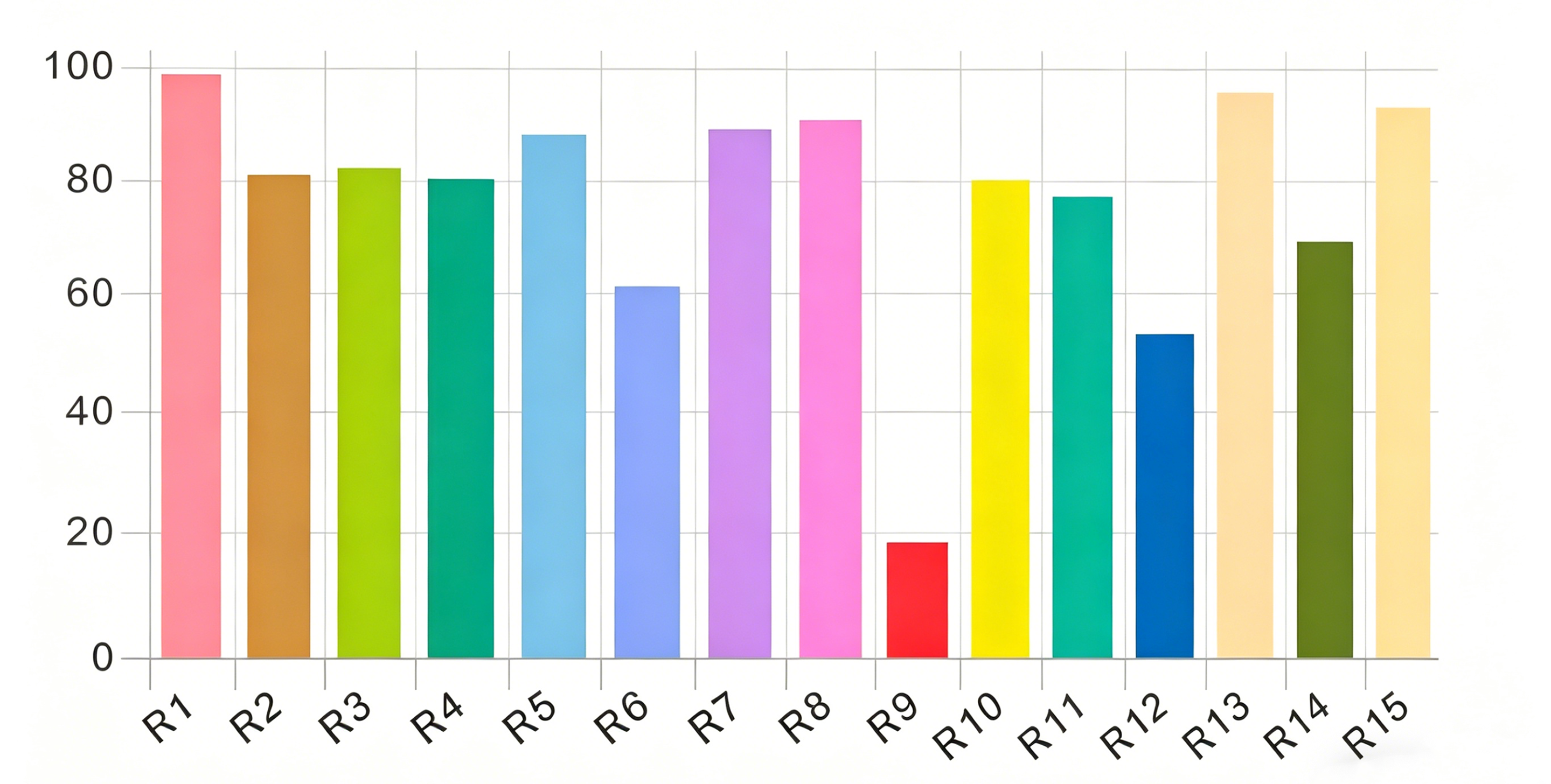
This happens because most standard white LEDs use a blue chip with yellow phosphor. While this creates strong blue, green, and yellow light for a high Ra, it leaves a major gap. The gap is in the long-wavelength red region above 600 nm.It is worst in the key 610–650 nm band (centered around 620 nm).
Visual Problems and Real-World Impact
Even with Ra above 80, a very low R9 makes colours look dull and lifeless.
In Commercial Spaces
In fashion stores, red clothing appears grey and flat. In fresh food areas, meat can look unhealthy and brown. Strawberries and tomatoes can lose their fresh appeal, reducing the desire to buy.
In Homes and Hotels
Low R9 is especially damaging for skin tones. When R9 is insufficient, people appear pale or slightly greenish under the light. This is unacceptable in premium hotels, high-end homes, and beauty spaces.
What Is a Good R9 Value
R9 performance should be judged by application. Here are the widely accepted ranges:
- R9 ≥ 90: Excellent – ideal for high-end retail, food display, art galleries, and photography. Reds look vivid and natural.
- R9 70–89: Good to excellent – suitable for most commercial and high-end residential projects. European supermarkets often recommend Ra ≥ 90 + R9 ≥ 70 for fresh food sections.
- R9 50–69: Acceptable for general retail, though food display can still be improved.
- R9 < 49 (especially below 30): Not recommended for red-sensitive applications. Many Ra 80 LEDs only achieve R9 of 0–30, resulting in poor red rendering.
We recommend evaluating Ra and R9 together. The ideal combination is Ra ≥ 90 + R9 ≥ 70. Higher R9 also helps meet WELL standards and local energy requirements in the UK and Europe.
How to Improve R9
Improving R9 usually involves trade-offs between cost, efficacy, and performance. High-R9 products cost more because they require better materials and tighter process control. We mainly use two proven methods for European customers:
1. High-Quality Red Phosphor Additives
We add premium nitride-based red phosphors to the phosphor layer. This fills the missing red spectrum, especially 610–650 nm, centered at 620 nm. This can raise R9 to 70 or even 80+. It is production-friendly, but red phosphors reduce efficacy by 10–20%, increasing cost. This is a practical choice for retail and residential projects seeking good value.
Red LED Chip Mixing
We mix dedicated deep-red LED chips (620–660 nm) with white light. This provides precise red enhancement, significantly boosting R9 while keeping high Ra. It offers excellent control and is ideal for fresh food displays, fashion retail, and premium hotels. However, it requires more complex drivers and careful tuning, raising system cost.
Why Settle for a Generic Spec Sheet
In Europe’s competitive retail and contract lighting market, a fixture with high R9 isn’t a cost. It protects revenue. It reduces returns, improves perceived quality, and ensures the shelf product matches the marketing photo.
If you're sourcing downlights or ceiling lights for a project where visual quality matters. This could be a fresh food aisle in France. It could be a luxury bathroom in the UK. We're ready to share full IES files and batch-specific R9 data. We won’t only send a generic spec sheet number.
As a reliable OEM/ODM partner and 18 years of professional manufacturing experience, we ensure consistent and traceable Ra and R9 performance in every batch — whether standard or custom. We help you deliver high-performance lighting solutions and stand out in the European market.
 Why Do Downlights Need Salt Spray Testing?


 2F, Building 2, Zhongda Industrial Park, Dongshan Industrial Street, Zhangmutou Town, Dongguan, Guangdong 523619, China