 Home
HomeSMD vs. COB Downlights: A Decision Guide
 A-ONE LED Lighting
 Jun 08,2026

In the global LED market, downlights have become a staple for residential and commercial spaces due to their recessed design and spatial efficiency. However, when choosing between Surface Mounted Device (SMD) and Chip on Board (COB) options, many wholesalers and brand owners find themselves in a dilemma.
This guide breaks down the core technical differences, weighs the pros and cons of each packaging technology, and addresses common project challenges like smart dimming and color shift.
Understanding the Tech: SMD vs. COB
Both SMD and COB are mature, industry-standard LED packaging methods. However, they alter light distribution and product performance in fundamentally different ways.
SMD (Surface Mounted Device)
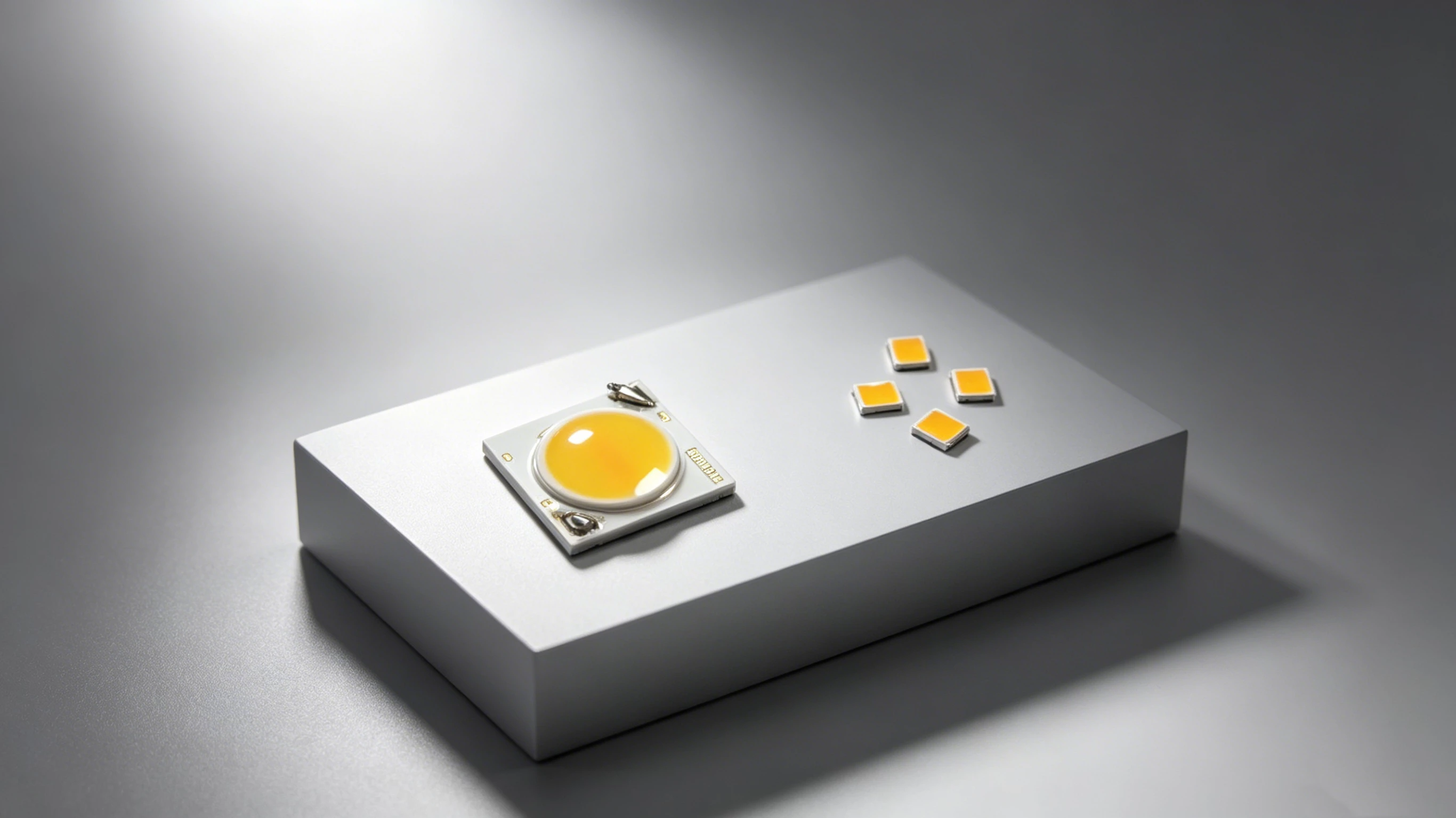
SMD is the most widely adopted packaging form in the mass market. It encapsulates individual elements—including the LED chip, phosphor, frame, and gold wire—into a single surface-mountable component (such as the popular 2835, 3030, or 5050 modules). Each SMD chip functions as an independent light source.
In an SMD downlight, a cluster of these chips (ranging from 12 to over 24) is populated across an aluminum printed circuit board (PCB). They work together with a diffuser or optics to deliver a broad, distributed glow.
COB (Chip on Board)
COB represents a highly integrated approach. Instead of packing individual housed components, bare LED semiconductor chips are mounted directly onto a highly thermal-conductive ceramic or aluminum substrate. This dense matrix of chips is then covered with a single, uniform phosphor coating.
As a result, a COB light source looks like a single, seamless, uniform emission surface. A COB downlight typically utilizes just one centralized COB module paired with a precision reflector or lens to control the beam.
Pros and Cons of SMD Downlights
Advantages
Cost-Efficiency and Mature Supply Chain: Because SMD production is highly automated with massive global capacity, the manufacturing cost per watt is lower than COB. It remains the go-to solution for high-volume, budget-driven rollouts.
Design and Layout Flexibility: Manufacturers can easily scale a fixture's wattage from 3W to over 30W simply by adjusting the number of chips or circuit layouts.
Serviceability: If a single SMD chip fails, a technician can desolder and replace that specific component using a hot-air gun rather than scrapping the entire light engine.
Dynamic Color Mixing: Arranging different chip types on a single board is straightforward. This makes SMD ideal for tunable white (e.g., 3000K to 5000K) or RGB color-changing architectural applications.
Disadvantages
Pixelation and Glare: Because an SMD layout relies on multiple discrete point sources, it can create a noticeable "dotted" or pixelated effect. Even with heavy diffusion, it lacks the optical depth required for high-end applications.
Thermal Clustering: While individual chips run cool, packing them closely on a flat board can cause heat buildup in the center. Without premium heat sinking, this accelerates lumen depreciation.
Pros and Cons of COB Downlights
Advantages
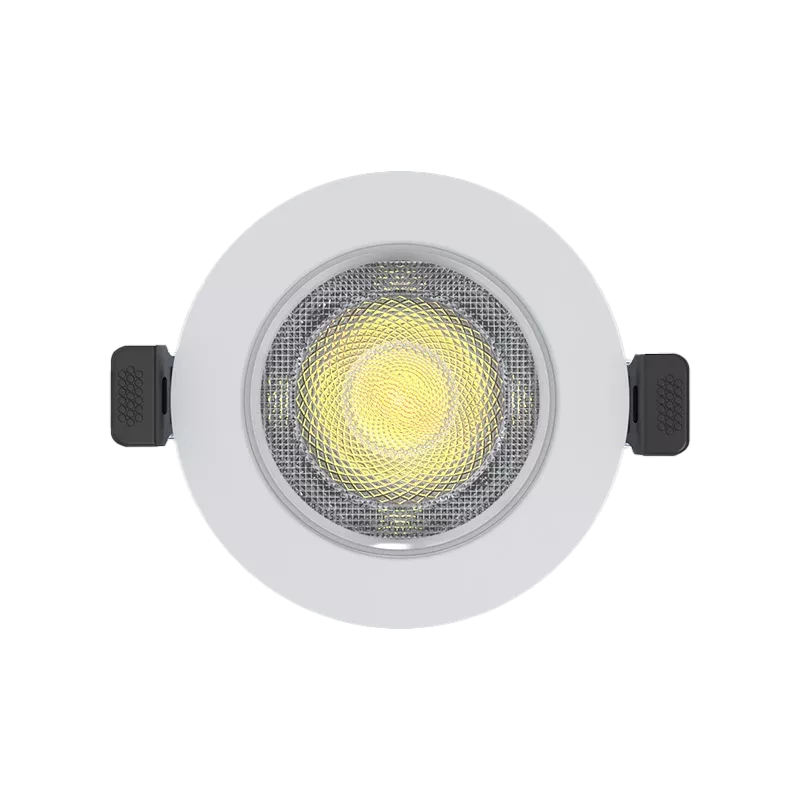
Exceptional Light Quality: COB provides a clean, continuous emission surface that eliminates pixelation. When paired with high-end optics, it delivers sharp, crisp beams with natural spill transitions and no multiple-shadow artifacts.
Precision Beam Control: COB modules concentrate high luminous flux into a small area. This allows engineers to design tight, punchy beam angles (such as 15° or 24°) perfect for accent lighting.
Superior Thermal Management: By mounting the bare chips directly to the thermal substrate, COB eliminates intermediate packaging layers. This ultra-low thermal resistance allows heat to dissipate rapidly into the heat sink, lowering junction temperatures and extending the fixture’s lifespan.
Disadvantages
Higher Initial Investment: The precision manufacturing, substrate materials, and specialized automated equipment required for COB production increase Bill of Materials (BOM) costs.
Higher Module Replacement Costs: If a COB module fails, it cannot be repaired at the component level; the entire light engine or fixture must be swapped out, requiring higher stock commitments for replacement parts.
Application Mapping: Which One to Choose
Selecting between SMD and COB comes down to your project's specific lighting objectives.
SMD Downlights
The primary goal of an SMD downlight is to deliver sufficient and uniform ambient illumination.
Core Fixture Types
- Wide-beam panel downlights: Featuring high-transmittance opal PC or PMMA diffusers for shadow-free, uniform general illumination.
- Ultra-Thin Downlights: Because SMD chips lay completely flat on a low-profile PCB, the entire fixture body can be made incredibly shallow. This is a massive advantage for European retrofit projects where ceiling plenum space is highly restricted.
Primary Settings
- Grade-A Office Spaces: Corridors, breakrooms, and open-plan offices. These spaces require uniform illuminance (such as the 300–500 lux averages mandated by EN 12464-1) while eliminating harsh reflections on workstation screens.
- Residential & Social Housing: Kitchens, bathrooms, and utility areas where long-term reliability and strict budget compliance are essential.
- Supermarkets & Big-Box Retail: Environments requiring wide-angle, high-lumen floodlighting to ensure lower shelves are fully illuminated.
COB Downlights
COB downlights are designed to shape spatial texture and create visual focal points through light and shadow.
Core Fixture Types
- Deep Recessed Anti-Glare Downlights: Fixtures where the light source is deeply set into the housing, utilizing dark or specular reflectors to achieve a premium "invisible source" effect.
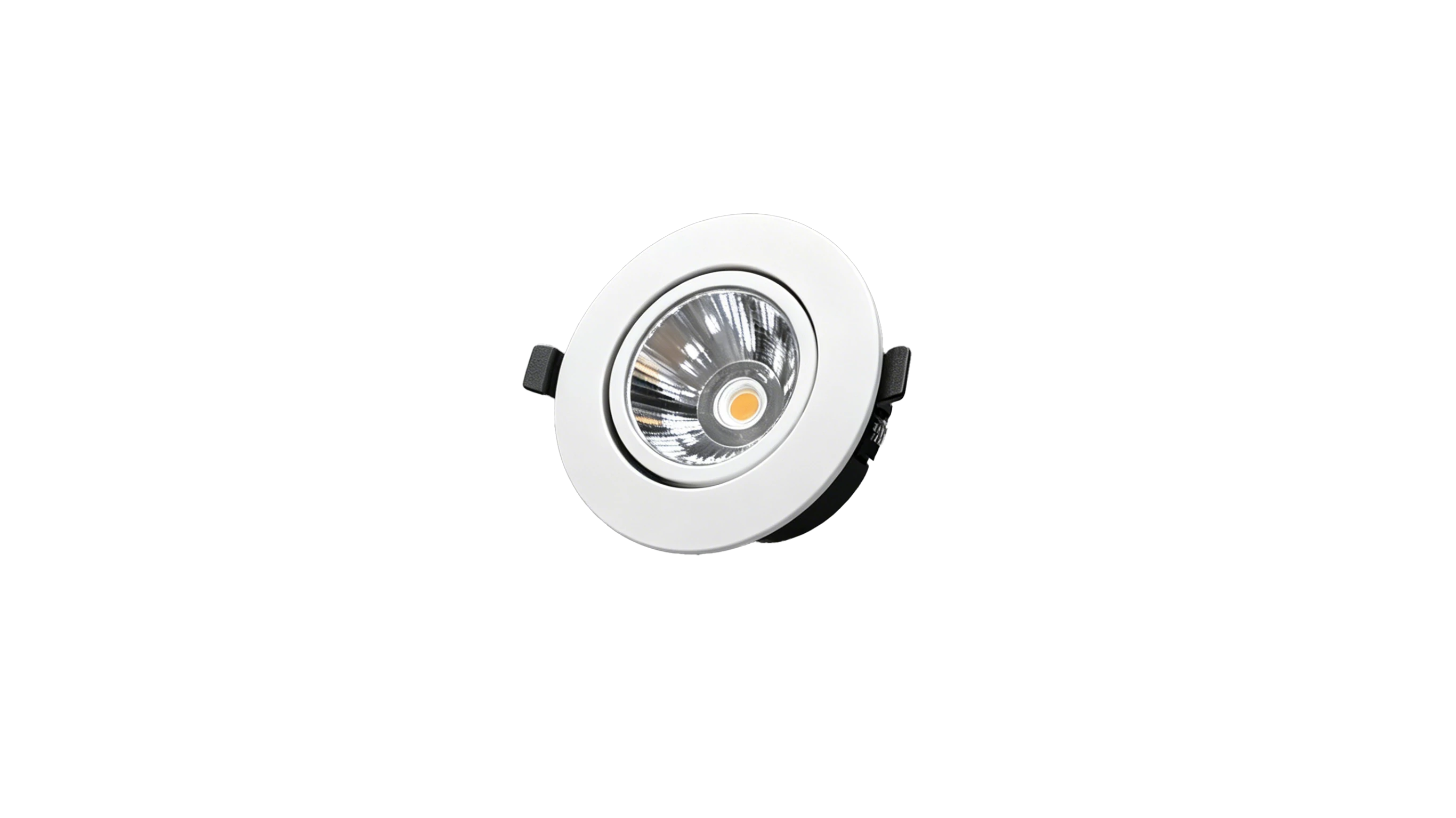
- Adjustable Accent Downlights: Utilizing COB’s high center-beam candlepower (CBCP), these fixtures tilt 25° to 45°, or even up to 180°, for precise wall washing or texture grazing.
Primary Settings
- Luxury Hospitality: High-end hotel lobbies, reception desks, and guest suites. COB fixtures cast crisp, elegant light arcs (scallop effects) on vertical walls, creating an intimate, premium ambiance.
- High-End Retail & Boutiques: Window displays, mannequins, and hero product showcases where high contrast ratios are needed to draw customer attention and drive engagement.
- High-End Residential: Luxury villas requiring pinpoint artwork illumination, feature wall grazing, or kitchen island accenting. Pair these with high-quality dimming systems to maintain perfect beam integrity at low levels.
FAQ
Q1: Besides SMD and COB, what other new packaging methods (e.g., CSP, MCOB) are used in downlights?
CSP (Chip Scale Package) is used in ultra-thin downlights and strips. Another emerging technology is MCOB (Multi-COB), which integrates multiple small emission cups for better heat dissipation, though it’s more common in high-bay industrial lighting than standard downlights.
Q2: Why do some low-end COB downlights turn blue or green after 2–3 years?
This is caused by severe color shift due to poor thermal engineering. Low-cost manufacturers often use sub-standard silicone and inferior thermal paste. Over time, excessive heat degrades the phosphor layer and yellows the silicone encapsulation, causing the light to shift toward blue or green wavelengths.
Q3: How do SMD and COB perform differently under smart dimming (e.g., DALI-2)?
COB offers a superior low-end dimming experience. When dimmed down to 1% or lower, the entire COB face dims uniformly as a single, soft glowing point, maintaining architectural elegance.
SMD can exhibit minor artifacts at low levels. Microscopic manufacturing variations between individual chips can cause slight variations in brightness across the array at ultra-low currents, sometimes creating a patchy or pixelated appearance.
Factory Recommendation: For projects requiring smooth, architecturally clean smart dimming, we highly recommend COB. At A-ONE, our DALI-2 solutions combine premium COB arrays with certified BOKE drivers to deliver flicker-free, continuous dimming from 100% down to 0.1%.
Q4: Do CE and UKCA compliance rules favor one technology over the other?
No. Compliance requirements for EMC, LVD, and RoHS are identical for both. However, due to their higher power density, COB fixtures require highly precise driver pairing and housing design to pass electromagnetic compatibility (EMC) tests easily.
Q5: Is COB inherently more energy-efficient than SMD?
Not necessarily. While high-end COB chips offer excellent luminous efficacy (lm/W), system efficiency depends heavily on the optics and driver quality. We always advise checking certified LM-80 and TM-21 documentation to verify actual lumen maintenance.
Partner with A-ONE Lighting
With 18 years of professional lighting manufacturing experience, A-ONE specializes in OEM/ODM services for international brands and distributors. We fully understand the challenges of choosing between SMD and COB and can provide tailored engineering recommendations based on your market and project needs.
 Why Choose Casambi Technology for LED Downlights?


 2F, Building 2, Zhongda Industrial Park, Dongshan Industrial Street, Zhangmutou Town, Dongguan, Guangdong 523619, China